
Katsuya Terada is a Japanese illustrator and artist with a rich career spanning over forty years. His works span multiple media, from games, movies, TV series to comics, and his artistic style can be seen.
After initially graduating from Asagaya Art College in Tokyo, he worked in the advertising industry, but soon expanded his talents to the gaming and entertainment industries. His art style combines a variety of influences, including classic comics, old-time Japanese movie posters, and French-Belgian comics, to create a unique aesthetic.
In the field of games, Katsu Terada has also designed covers for many well-known works, such as Data East’s Japanese limited game “Detective Jinguji Saburo”, as well as the Super Nintendo version of “Prince of Persia” and the Sega Saturn game “VR Kombat Remix”. His works also often appear in “Nintendo Power” magazine and various game guides. He has reinterpreted countless classic games from a unique perspective, such as “Dragon Quest”, “Final Fantasy II (IV)”, and “The Legend of Zelda: Dream Island”.
Last year, we originally wanted to invite Mr. Terada to talk about his classic cover for the Super Nintendo version of Prince of Persia as part of a retrospective feature. However, as the scope of the interview expanded, we decided to explore further his wonderful creations in other areas. Mr. Terada graciously accepted our invitation to share his thoughts on art, his experience working with Nintendo, and how he got the chance to work on VR Kombat 2.
The following is the complete interview content, translated and compiled by Japanese-English translator Liz Bushouse, and Time Extension is the original interviewer.
Time Extension: You have mentioned that the French artist Mœbius had a profound influence on your style. Do you remember how you first came across his work?
Katsuya Terada: The first time I saw a painting by Mœbius was when I was 15 years old. I discovered it in a brief introductory article in a Japanese monthly science fiction magazine. It was then that I realized for the first time that the world was made of Mœbius lines.
Time Extension: We have read in the past that you were able to participate in the production of the NES/Famicom game “Detective Saburo Jinguji” because of the recommendation of illustrator Toshio Nishiuchi. How did you meet him? Did he attend Asagaya Art College at the same time as you?
Katsuya Terada: (Laughs) Mr. Shinerife is a children’s animator. He is four years older than me. While I was still in school, he was already working in industry. But, coincidentally, one of his fellow graduates was teaching an imaging course at the school, and I met him while attending the course. He was working on “Detective Saburo Jinguji” at the time, but his style of painting didn’t fit well with the game’s hard-core detective worldview, so he recommended me to the development team. To this day, we are still very good friends.
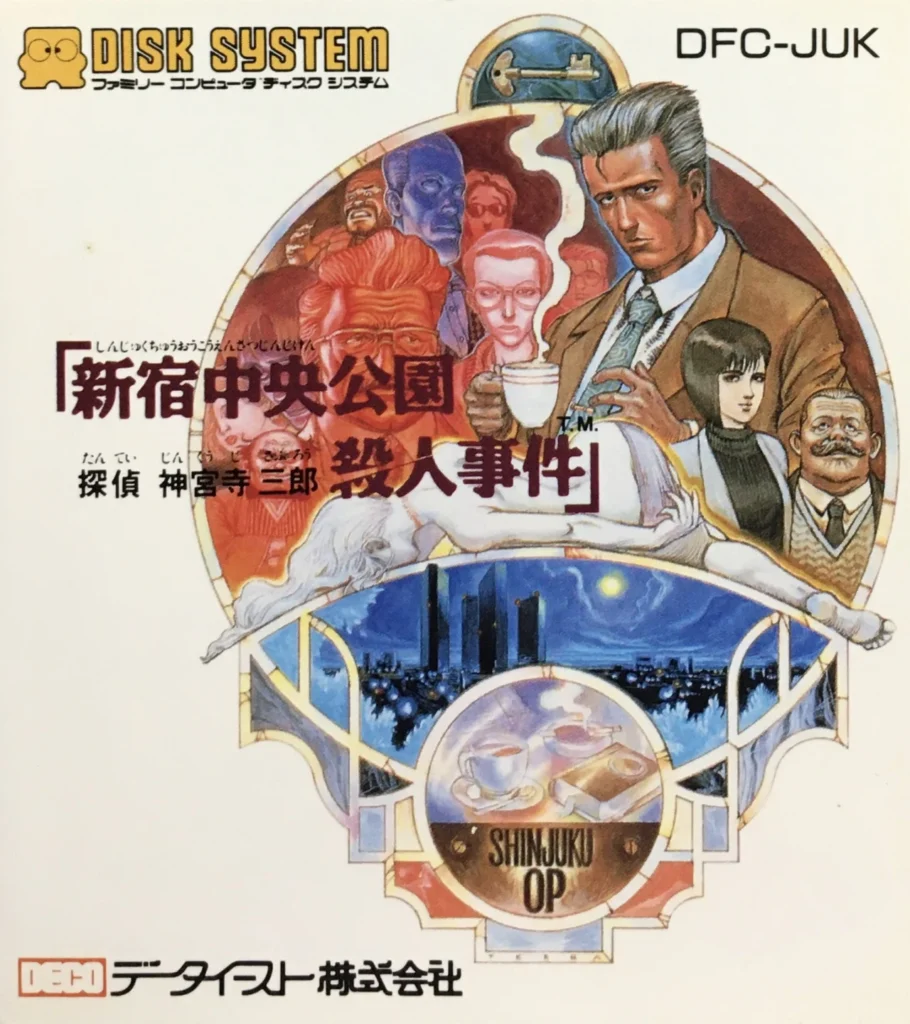
“Detective Jinguji Saburo” was released on the Famicom Disk System in 1987, kicking off the long-running “Detective Jinguji” series.
Time Extension: Before working on Detective Saburo Jinguji, were you a fan of video games yourself?
Katsuya Terada: Yes, but I can’t be called an avid gamer. Even after I started working on Saburo Jinguji, I didn’t own an NES console.
Time Extension: Do you remember your first experience playing The Legend of Zelda? Did you play this game before working for Nintendo?
Katsuya Terada: Actually, I have never actually played “The Legend of Zelda”, but through Japanese game magazines at the time, I was already quite familiar with its world view.
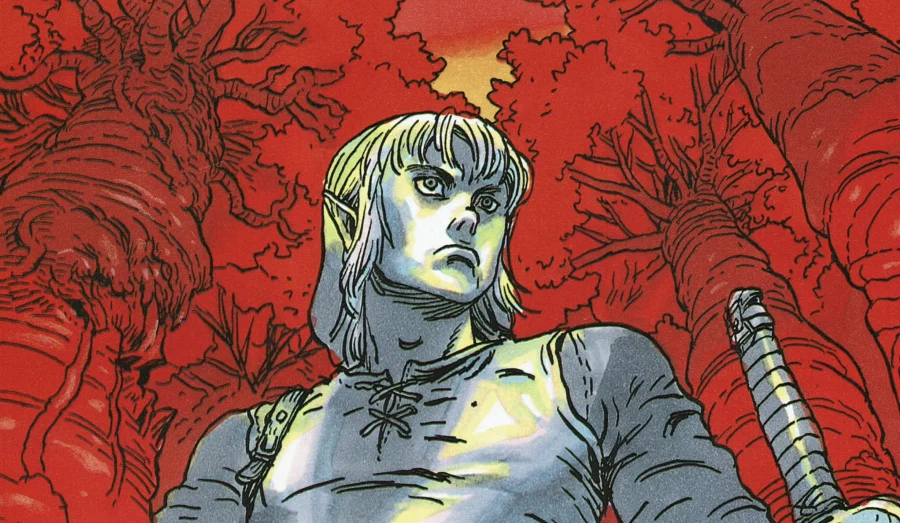
Katsu Terada is also one of many Japanese illustrators working for Nintendo’s “Nintendo Power” magazine. His main responsibility is to illustrate magazine articles, but he is also occasionally commissioned to create artwork for official guidebooks, such as the covers and illustrations for the Nintendo’s Player Guide and the German version of The Legend of Zelda: Dream Island guidebook.
Time Extension: Did Nintendo provide you with specific guidelines when it came to working with characters like The Legend of Zelda? Or was your position secure enough at that time that you could act freely without restrictions?
Terada Katsuya: At that time, the game industry was not as strict in character management as it is now, so my creation on “Nintendo Power” was basically completely free. I remember being able to draw whatever I wanted. And, because the resolution of Famicom games is so low, it gives me a lot more creative freedom.
Of course, I also understand that my job is to transform the world of Zelda into a more realistic style, so I try not to stray too far from the visual design of the original. Fortunately, my style has always been about realistic fantasy worlds, so in that regard, I consider my work on The Legend of Zelda to be a success.
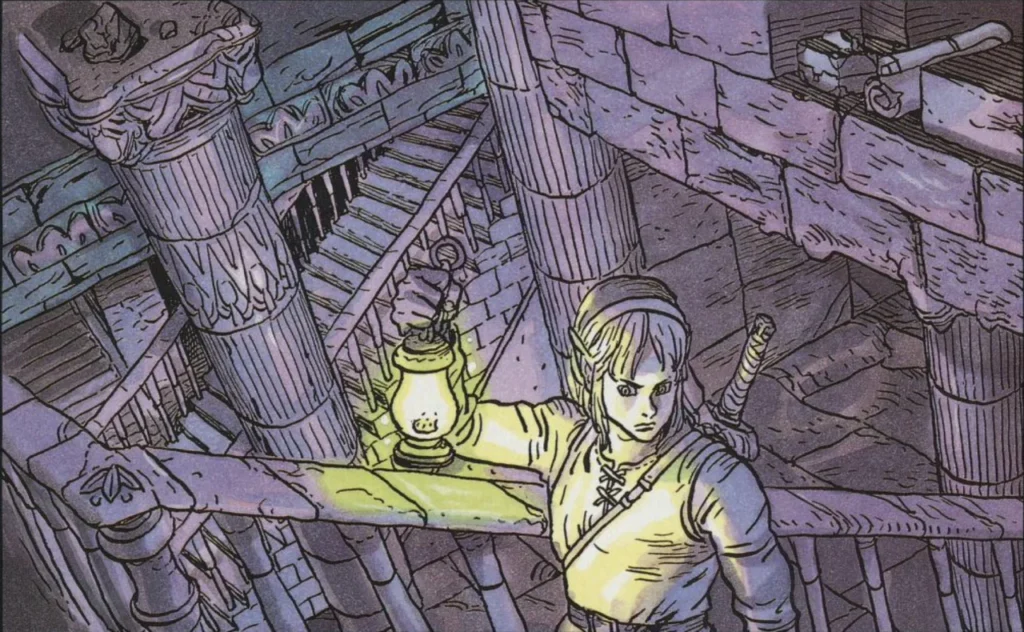
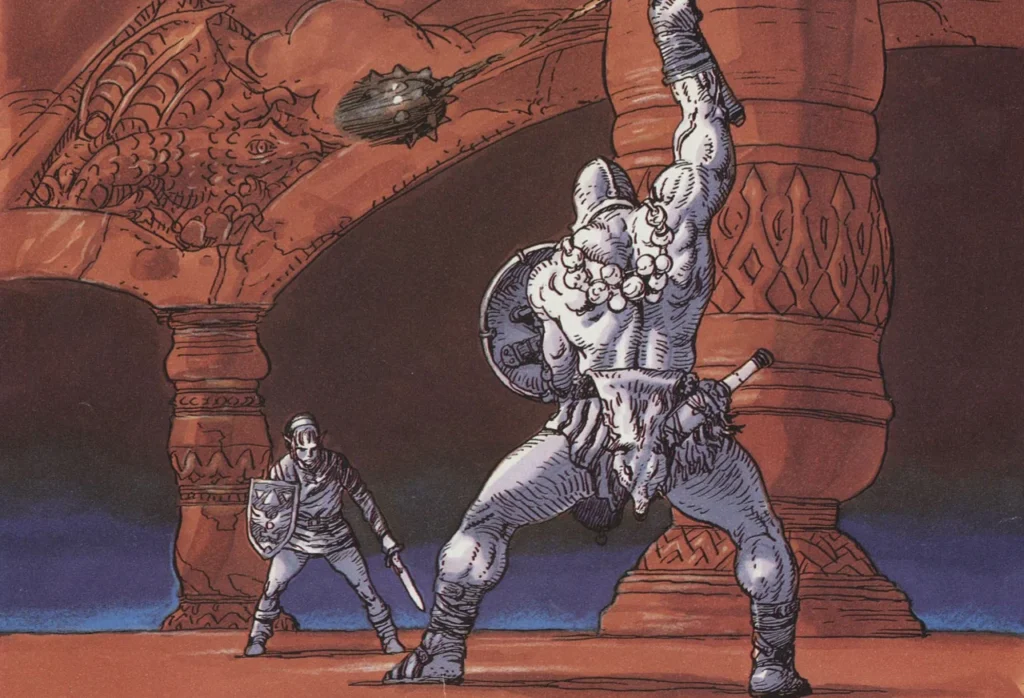
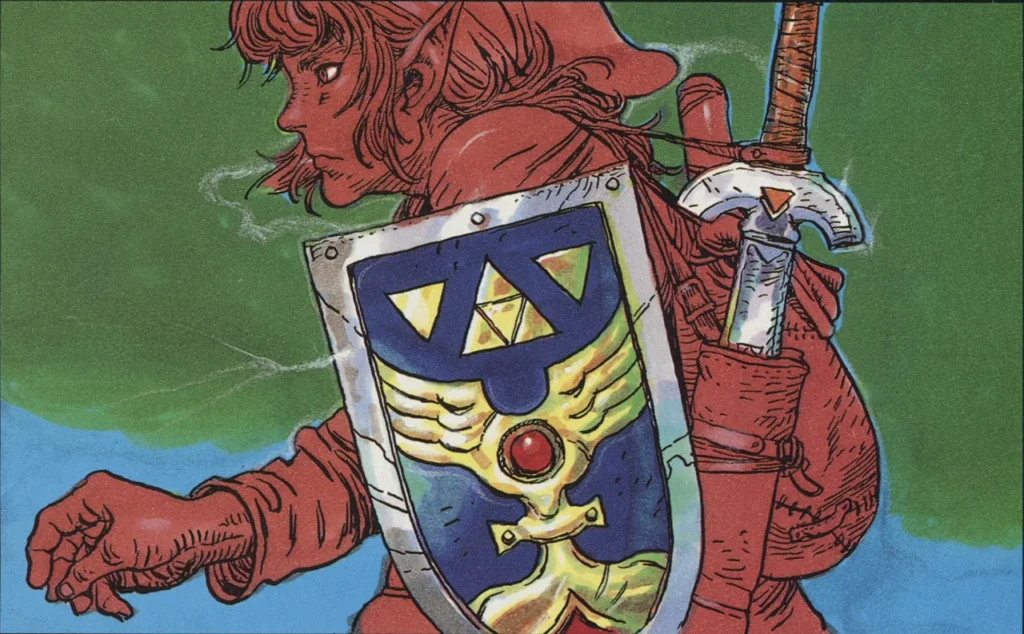
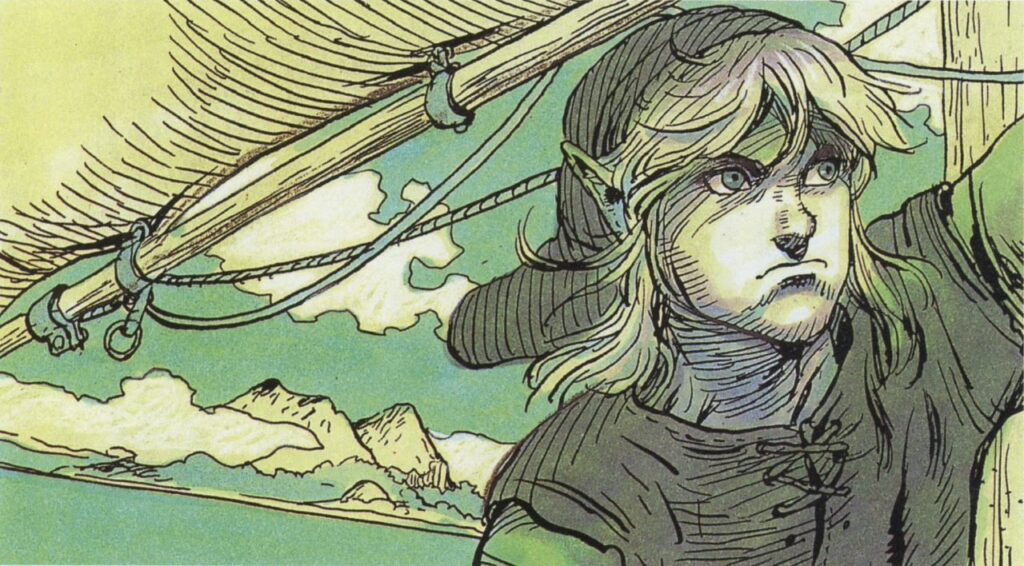
Time Extension: Are there any other Nintendo characters you’d particularly like to see reinterpreted in your own style?
Katsuya Terada: This is a good question, but I don’t have any particular character in mind right now. oh! I’ve always loved Metroid, and it would be fun to get the chance to draw something related to it as a job.
Time Extension: Your work is always very distinctive in its use of color, giving it a feeling that is more abstract than realistic. Can you share how this aspect of your style developed? Or has your use of color evolved over time?
Katsuya Terada: As you know, my works do not pursue complete realism, and I will make some artistic adjustments as needed. If I could attribute it to some past artistic influence, I think I was deeply influenced by Japanese comics. One of the basic characteristics of Japanese comics is that they use pictures to enhance the narrative of the story. This visual expression technique has become one of the core of my creations.
As for the use of color, I often feel that I am still lacking in this area. This is a process of continuous experimentation and exploration, trying and adjusting every day. I think this kind of continuous experimentation is very important. If I want to give an example, I think the works with truly brilliant use of color come from Japanese ukiyo-e and French-Belgian comics.
Time Extension: Are there any specific designers or poster artists who have influenced the way you compose your images? We particularly feel that your cover design for Prince of Persia is reminiscent of past legends of Hollywood movie posters such as Bob Peak and Richard Amsel.
Katsuya Terada: I really like these two artists, but the person who has the deepest influence on me should be the Japanese illustrator Noriyoshi Ohrai. Since I was a child, I have seen his paintings everywhere – movie posters, book covers, illustrations, advertisements… His works are very dynamic. Every time I see them, I stop to admire them and I am deeply shocked.
Time Extension: The cover design of “Prince of Persia” is obviously based on a specific cultural and historical background. For this type of work, do you usually do a lot of research, referencing clothing and designs from the relevant era, or do you prefer to create your own unique interpretation of reality?
Katsuya Terada: Growing up, I watched countless movies. I’m particularly fond of Harryhausen’s work and was inspired by classic films like Lawrence of Arabia and The Godfather. However… to be honest, I’m more interested in reading than watching movies.
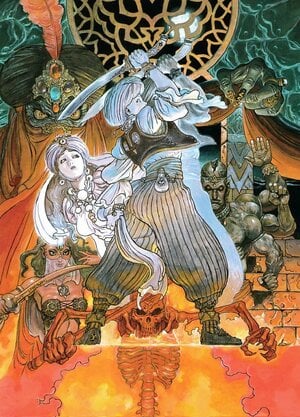
Art design for the Super Famicom version of Prince of Persia. This port of the Apple II original was developed by Arsys Software, a company founded by a group of people who had worked on Thunder Force, and was published by Nippon Computer System (NCS).
Even at a young age, I was exposed to more adult-oriented books. Words can stimulate the imagination more than pictures. You can say that I exercised my imagination in the world of novels, while movies taught me how to observe historical scenes, clothing styles, and how the future world will be presented. These experiences improved my understanding of different worldviews, which ultimately translated into my personal style.
Although this may be a bit off topic, if I want to be more specific, I would say that my “visual vocabulary” actually already exists in my mind. When I want to present a certain image, I will extract elements from this internal database to reorganize and create. This method is particularly effective when depicting a world that does not exist in reality. My work is mostly disconnected from reality, but I still try to make the pictures look “real”. This is my unique way of “reconstructing reality.”
Katsuya Terada: I think it is crucial to store visual information in one’s own “visual database” and to review, observe, touch, and depict them regularly. This process of accumulation and iteration allows creators to naturally draw inspiration from it when needed and form a unique style and language.
Time Extension: We are curious, how did you get the opportunity to cooperate with SEGA on “VR Kombat 2”? How did they notice your work?
Katsuya Terada: At that time, Mr. Kurokawa, the public relations manager of the SEGA AM2 department, was responsible for promoting the development team led by Yu Suzuki (the creator of “VR Kombat”). He had participated in the production of Keita Amamiya’s movie “Zeiram”, and I was responsible for the costume design, so we had known each other for a long time.
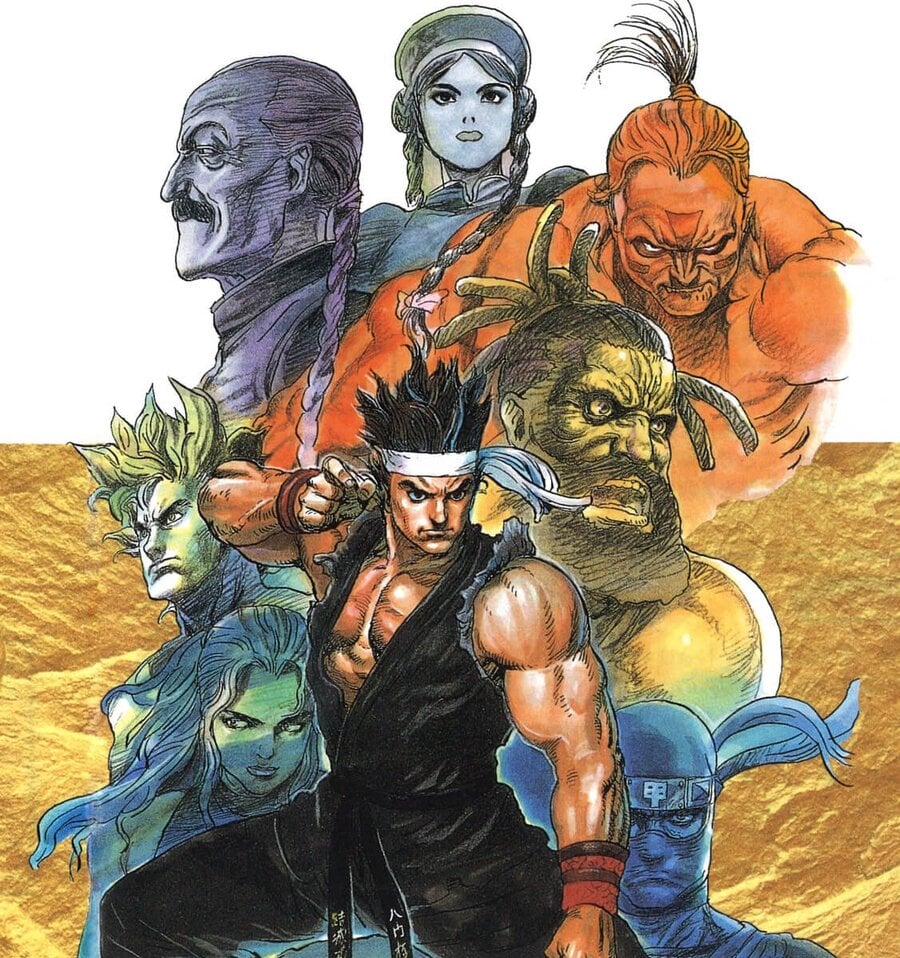
Katsuya Terada drew the illustration for the Japanese cover of the Sega Saturn game “VR Kombat Remix” released in 1995.
Many years later, he called me out of the blue and invited me to be responsible for the character design remake of “VR Kombat 2”. At that time, “VR Kombat 1” had been completed, but at a release event, the team received feedback that “I hope the characters in “VR Kombat 2” can be more realistic, so they decided to ask me to redesign it.
Mr. Kurokawa later told me that he saw a small illustration of a sumo wrestler I drew in a column in a magazine. He felt that this style was very suitable for “VR Kombat 2”, so he decided to contact me to give it a try. You never know what might happen to land you a new job!
Time Extension: It is rumored that you received a large arcade machine because of your work on “VR Kombat 2”. Is this true? Do you still have that machine?
Katsuya Terada: Strictly speaking, this is true, but the story is a little twisty (laughs). At that time, they said they would give me a large-scale console for “VR Kombat 1”. Of course I was very happy! But when the machine was delivered to my apartment at the time, I found that I couldn’t move it in… so they shipped the machine back again.
The moment I watched it being moved, I literally almost cried. But a few days later, they sent a disassembled version. They took apart the screen, controllers, internal parts, etc., and then helped me reassemble it in my apartment.
However, the voltage in the apartment I live in is very low, and after the machine is turned on, I need to wait 30 minutes before it can operate normally. But because I was so touched by this thoughtfulness, I still play every day. After a few years, I outgrew the room and ended up sending it back to SEGA. Unfortunately, it is no longer in my hands now.
Time Extension: Finally, we noticed that you recently had a solo show in Los Angeles called NO TITLE, which is coming to an end. What are your next exhibition plans? How can fans follow your latest developments?
Katsuya Terada: I am still working on commercial commissions, but I also devote a lot of time to preparing for personal exhibitions, which takes up about half of my time a year.
Every year I hold a solo exhibition at GR2 Gallery in Los Angeles, and I usually have one or two exhibitions in Japan. Recently, I have also begun to try to expand the exhibition to other Asian countries.
Fans can follow me on Instagram and Thanks!
Time Extension: Thank you again for your time, Mr. Terada! This interview is a unique opportunity for us!
Katsuya Terada: Thank you! I’m so happy to be part of this interview!
source:Time Extension