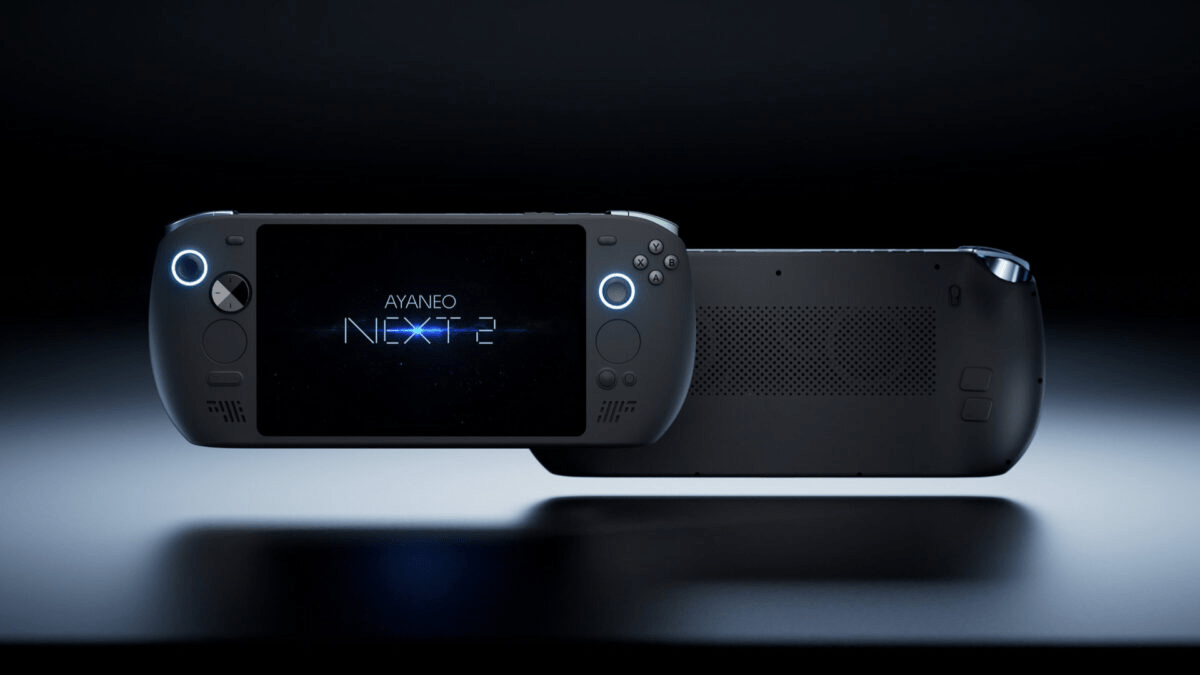
In an environment where the cost of memory and components continues to rise in 2026, the handheld market has begun to see increasingly exaggerated product positioning, and AYANEO’s latest release of NEXT 2 almost takes the words “performance first” to the extreme. Officials have confirmed that this Windows handheld machine equipped with AMD Ryzen AI Max + “Strix Halo” platform will begin overseas shipments in June 2026. The complete price and specifications have also been announced. At first glance, the first reaction of many players is: Is this really a handheld machine?

The price jumps directly into the enthusiast-level PC range
NEXT 2 launches a total of three main configurations, all of which are top-level, and there is no entry-level version at all.

Ryzen AI Max 385(32GB + 1TB)
- Early bird price: $1,799
- Official price: $1999
Ryzen AI Max+ 395(64GB + 1TB)
- Early bird price: $2,299
- Official price: $2699
Ryzen AI Max+ 395(128GB + 2TB)
- Early bird price: $3,499
- Official selling price: $4299
The highest specifications are directly close to the price of high-end gaming notebooks and even desktop computers. This is no longer a product that ordinary players can buy on impulse, but is very clearly targeted at serious gamers and hardware collectors.
Packed with specifications, it’s almost like putting a high-end PC into a handheld case
The core selling point of NEXT 2 is to use the top hardware configuration to support its performance positioning. The screen uses a 9.06-inch OLED panel with a resolution of 2400×1504, a maximum refresh rate of 165Hz, and a brightness of up to 1155 nits. The memory uses LPDDR5X-8533, with options up to 128GB. The storage supports dual SSDs, including M.2 2280 and M.2 2230 PCIe 4.0, taking into account both capacity and speed.
The overall heat dissipation uses dual fans with a VC structure. The battery capacity is directly increased to 116Wh. It also supports USB4 40Gbps, Wi-Fi and Bluetooth 5.4. The system is Windows 11. Overall, it is positioned more like a high-end mini computer that can be handheld, rather than a handheld console in the traditional sense.

Weighing 1.4 kg, holding it for a long time is almost equal to fitness
The performance penalty is also obvious. The weight of NEXT 2 is about 1426g, which is 1.4 kilograms, which is almost twice the weight of ordinary handheld consoles. Compared with products around 600g such as Steam Deck and ROG Ally, NEXT 2 has entered the range of “it will be tiring to hold it for a long time”. This also shows once again that its positioning is actually more of a desktop replacement device than a pure portable entertainment tool.
The battery is too big. You may need to apply to bring it on the plane.

Even more exaggerated is the battery capacity of 116Wh. Officials directly mentioned in the sharing session that this has exceeded the 100Wh limit common to many airlines, so some flights may require additional approval documents to be filled in before they can be carried on board. This situation is almost the first time it has appeared in the handheld market, and it makes this product even more “unusual.”

DRAM costs are soaring, which is also the reason why prices are rising
AYANEO also admitted that the recent continued rise in DRAM prices is one of the important factors driving up the overall selling price. In addition, Strix Halo itself is AMD’s top platform, and the cost is naturally high, making it difficult for this type of high-end handheld console to reach mainstream prices. From a market perspective, NEXT 2 is likely to maintain a niche positioning rather than become a mainstream product that is widely popularized.

This machine is actually creating “another path for handheld consoles”
If Steam Deck brings PC to handheld, NEXT 2 does the opposite, shrinking high-end PC directly into a handheld form. It is not intended to compete with mainstream handheld consoles for sales, but to target the top group of players who are willing to pay for performance.