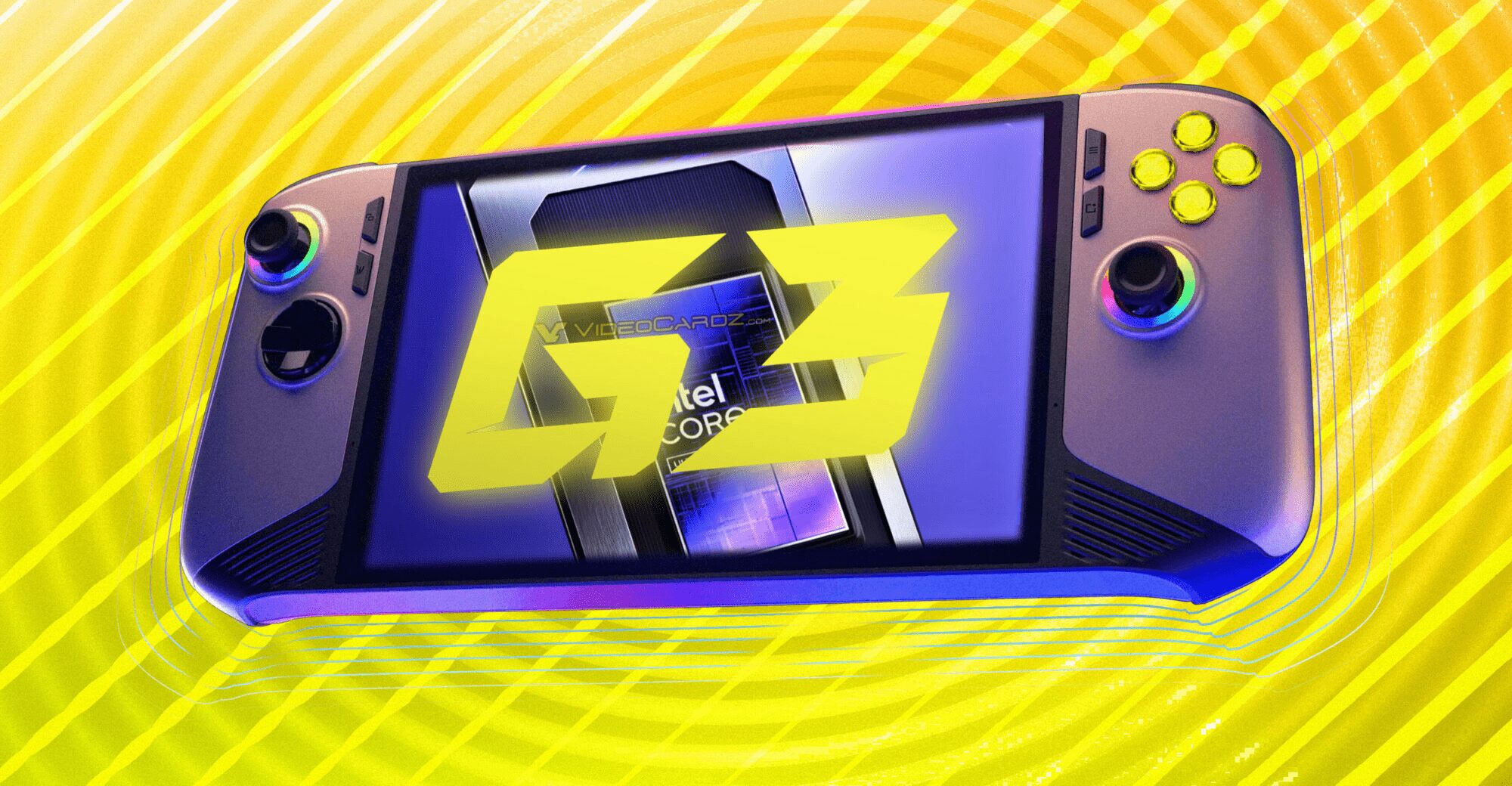
New information has been revealed about Intel’s next-generation Panther Lake architecture for the handheld market, and this time the focus is on memory configuration. The latest information shows that the Arc G3 series, which is mainly used for handheld consoles, will use LPDDR5X-8533 instead of the highest-end LPDDR5X-9600. This positioning is actually very critical, because in handheld console design, memory speed is often more important than desktop consoles, which directly affects the overall game performance!
8533 MT/s becomes the mainstream configuration
Currently, Panther Lake memory specifications are roughly divided into three levels. The highest-end LPDDR5X-9600 will only be paired with a few top-end models, such as Core Ultra X9 388H, Core Ultra X7 368H, and Core Ultra X7 358H, which will also come with Arc B390-level graphics cores.
The handheld G3 series is focused on LPDDR5X-8533, covering Core Ultra 9 386H, Core Ultra 7 366H, Core Ultra 7 356H, and Core Ultra 5 338H models. This batch will be the main specifications of the future Arc/Core G3 and Arc/Core G3 Extreme.
As for the lower-end LPDDR5X-6800, it will appear on Core Ultra 7 365, 355, and Core Ultra 5 335, 325, 332, 322 and other models, which is a more entry-level configuration.
Why handheld consoles rely more on memory speed
Handheld computers do not have independent graphics cards like desktop computers, and iGPU directly shares the system memory bandwidth. The higher the data rate of LPDDR5X, the higher the bandwidth theoretically, and the actual frame rate improvement in GPU-limited scenarios.
However, performance is not just about memory speed, it is also affected by GPU size, power consumption limitations, and each OEM’s tuning methods. In other words, the difference between the 8533 and the 9600 won’t always be that obvious, but it does happen in some games.
Realistic considerations of cost and price
The handheld model uses LPDDR5X-8533 instead of the top-end 9600, which actually reveals a very realistic strategy: Intel probably wants to put these products in the “mass production-level mainstream market” instead of only making them for high-end players.
Using higher-yield memory specifications can lower the overall platform cost and prevent the price of handheld consoles from reaching an exaggerated high-end range. For OEMs, this means they can launch more products in different price ranges, rather than all taking the flagship route.
G3 naming is still in confusion

At present, Intel’s own documents have not completely unified the names of this series. Some materials say Core G3, some say Arc G3, and the latest roadmap is beginning to lean towards the name Arc G3. There are also documents that refer to iGPU as Arc B390 instead of the original B380. It seems that the entire naming system is still being adjusted.
According to the existing roadmap, the G3 series is expected to be launched in the second quarter of 2026, but no OEM has publicly confirmed which handheld consoles will be the first wave of products.