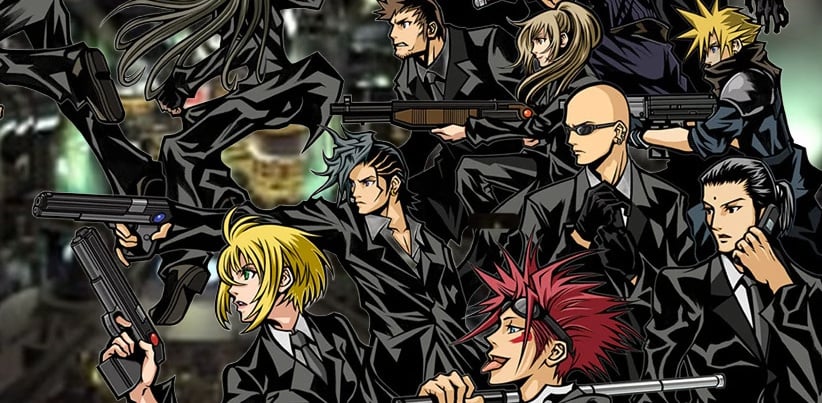
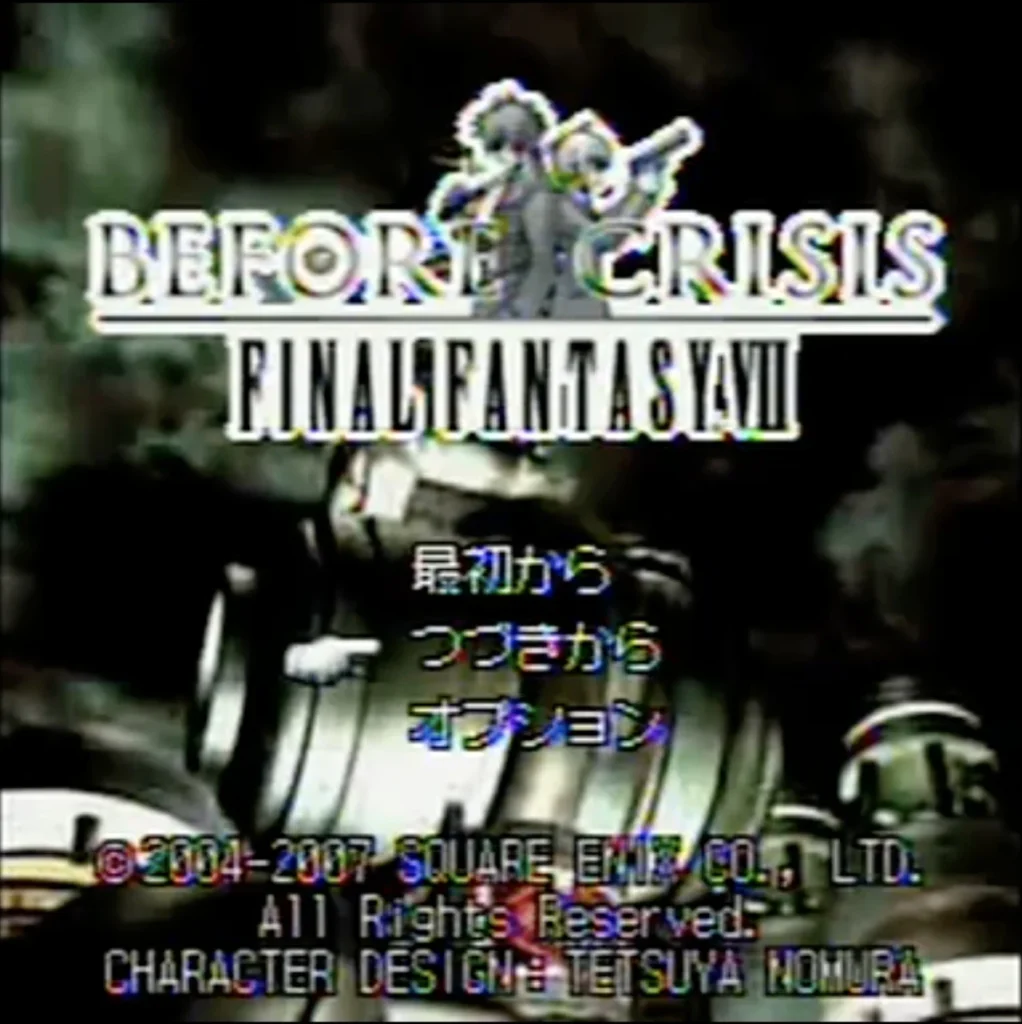
Since “Final Fantasy VII” was first released in 1997, Square Enix has launched countless spin-offs, but the most mysterious and interesting to Western players is the prequel “Before Crisis: Final Fantasy VII”.
This action role-playing game was first used on NTT Docomo’s FOMA 900i series mobile phones as a platform, and was exclusively released in Japan in the form of chapter serialization. As the first game in the Compilation of Final Fantasy VII series, the game’s story background is set six years before the events of “Final Fantasy VII” and features the Turks secret service organization as the protagonist – this organization was previously depicted in “Final Fantasy VII” as a secret department affiliated with the Shinra Corporation (Shinra).
The game was launched in episodic form, with the first episode released in September 2004 and continued updates until March 2006. Each chapter gradually reveals the conflict between the Turks and the resistance group AVALANCHE, supplementing the background before the main story of “Final Fantasy VII”.
Square Enix had planned to launch a localized version of the game for Western players and conducted public promotions and media trials. However, due to the poor performance of mobile phones in Europe and North America at the time, it was impossible to run this game that highly relied on i-mode technology smoothly, and it was finally decided to release it only in Japan. Later, the full version was ported to other mobile phone platforms in Japan in 2007, including Softbank and EZWeb series mobile phones, but it still has not entered the international market.
Before Crisis: Final Fantasy VII has been attracting a lot of attention from Western gamers for nearly two decades. They did their best to collect and record all the information and game content about this mysterious prequel. This work became even more urgent after the game servers went offline in March 2018, because this meant that the game might become a “lost game” and disappear forever from the long history.
In the past few years, fans have even used the RPGMaker game engine to recreate the game, trying to restore the plot and gameplay of the original as faithfully as possible. At the same time, there are also some preservation groups, such as the Keitai Wiki Discord community, which have been working hard to collect and preserve the complete files and data of the game, hoping to preserve this important page of game history.
That’s why we decided to dig deeper into the history of this mysterious prequel and the fan community that formed around it. Over the past year, we’ve taken a closer look at Square Enix’s original intentions and the various rescue efforts fans have made so far. In order to fully present this story, we specially invited Japanese-English translation expert Stephen Meyerink to help us translate and organize past interviews with Square Enix employees, and interviewed many key figures dedicated to preserving the game.
However, before we delve into that, we must first review how Square Enix entered the mobile gaming market, which is crucial to understanding the birth and development of Before Crisis.
The birth of “Before Crisis”
The story begins in the early 2000s, when NTT Docomo’s i-mode service was launched in 1999. This innovative mobile network service brings new possibilities to mobile games and has also attracted the attention of many Japanese game giants.
At that time, Square, Enix and Namco began to cooperate closely and even planned to establish a joint venture to jointly develop software support solutions for mobile games based on Square’s PlayOnline game network. This plan shows that the three companies attach great importance to the online game and mobile game market.
For these three companies that played a decisive role in the gaming industry at the time, they all clearly realized that online games and mobile games would become important directions for future industry development. The complementarity and integration of each other’s resources will allow them to take the lead in this wave of trends.
However, this highly anticipated joint venture ultimately failed to take shape. Square and Enix announced in 2002 that they would merge the two companies, excluding Namco’s involvement. This merger plan completely changed the power map of the Japanese game industry and completely bankrupted the original joint venture plan.
At that time, Square and Enix announced that the main reasons for the merger included rising game development costs and competitive threats from foreign game developers. However, another relatively low-key but crucial reason is their common desire to expand their presence in the online and mobile gaming markets. This vision ultimately led to the birth of Square Enix and paved the way for the development of Before Crisis. ,
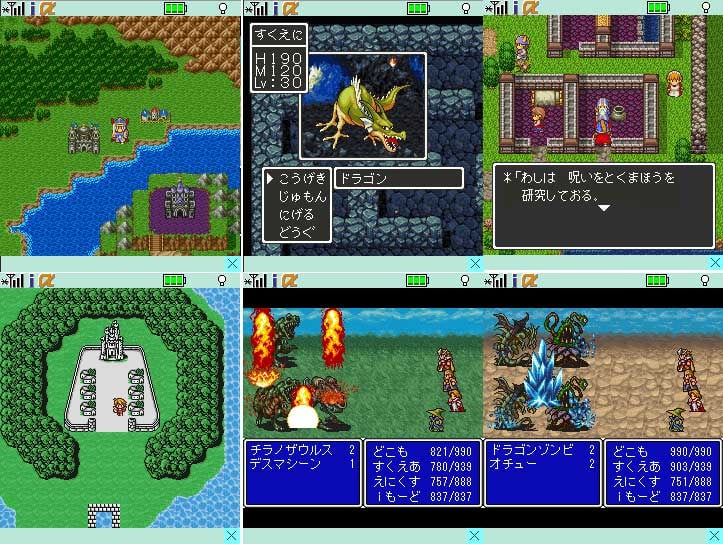
The above is the remastered version of “Dragon Quest” and “Final Fantasy” on Japanese feature phones.
Take Square as an example. They have already started to get involved in online game development and launched “Final Fantasy XI” in the same year. They also released “Chocobo Anywhere”, the company’s first mobile game series.
Meanwhile, Enix released a portable version of Dragon Quest Monsters on Japanese mobile platforms and greenlighted an ambitious trilogy of remakes based on Yuji Horii’s classic adventures, including Portopia Serial Murder Case and its two sequels, The Hokkaido Serial Murder Case: The Okhotsk Disappearance and Karuizawa Yūkai Annai.
Since the two companies have highly consistent strategies in the fields of online games and mobile games, they decided to further integrate resources and strengthen cooperation.
Square and Enix completed their merger on April 1, 2003, and in September of the same year announced plans to enhance porting of “Final Fantasy” and “Dragon Quest” on the NES/Famicom platform, which are expected to be released the following year. Then in July 2004, Square Enix announced that it would develop a FOMA mobile app based on Final Fantasy VII.
This work, called “Before Crisis: Final Fantasy VII”, was developed by a small team of only 11 people in Square Enix’s Tokyo office and was launched simultaneously with the remake project in 2003. The game was released as a beta test version in August 2004, and the first chapter was officially launched in September of the same year.
In an old issue of Gangan magazine, Final Fantasy VII character designer Tetsuya Nomura said of the genesis of the project:
“It all started when we wanted to do something on a mobile device. Although mobile phones are essentially communication devices, most mobile games at the time were single-player, offline experiences. From my point of view, this design was a bit strange – because since it is a communication tool, why not use it for online interaction? The reason for choosing “Final Fantasy VII” as the subject matter is that we think this can make it easier for more players to get started.”
Tetsuya Nomura said when talking about how to attract players’ interest and make them want to play:
“When I was thinking about how to attract players and get them interested in the game, I happened to be working on Final Fantasy VII Advent Children. So I started thinking about whether there was a way to connect the two projects. Then I thought that telling the story from the perspective of the Turks might bring a refreshing feeling.”
At the same time, game producer Kosei Ito also mentioned in an interview with itmedia:
“It was Nomura’s idea to cast the Turks as the protagonists. When we decided to set the world in the world of Final Fantasy VII, the development team created a very detailed timeline that even extended into the ancient times of this world’s history. The content is amazingly rich.
“When we traced this timeline, we discovered that before Barret became the leader of AVALANCHE, there had been a similar rebel group called AVALANCHE. At that time, we thought: ‘Wow! This can be used in the game!’ (Laughs) We thought that making AVALANCHE the villain would surprise players. And there is a lot about the Turks’ worldview that can be incorporated into the game. Plus the Turks It was quite popular among female gamers, so we finally decided to make them the protagonists of the game.”
Unique features and gameplay
In the original version of the game, players had to choose from a group of new Turks to play (this included a male character and a female character, whom fans dubbed “Rod” and “Gun” due to their weapon choices). They will then see a menu that allows them to train, participate in various story missions, review and modify character names, and switch between different playable characters. This last point is especially important as Square Enix plans to introduce new characters in subsequent chapters, along with other additional modes and other content.
The cost of this additional content is paid for by players through a monthly subscription fee of 525 yen, and Square Enix has released a total of 24 story chapters, plus three additional special missions based on the characters Tseng, The Legendary Turk, and Reno.
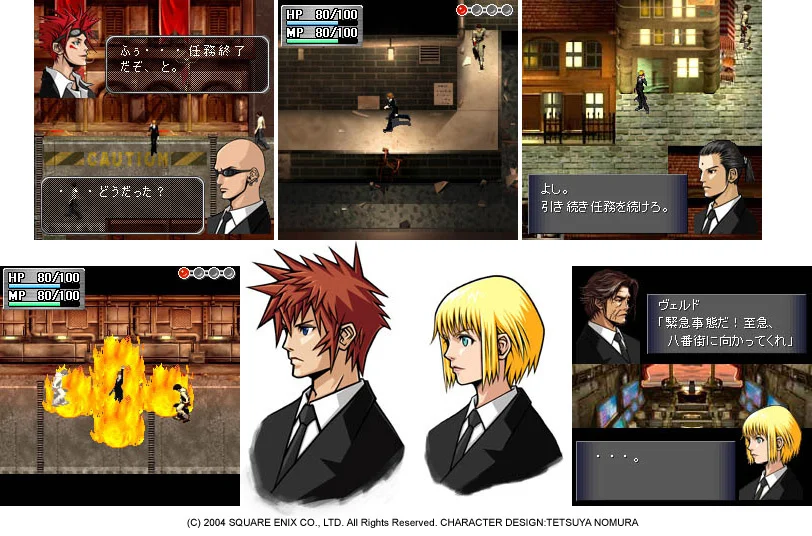
In the bottom row, middle image, you can see illustrations of the Turks characters known to fans as Rod and Gun.
Differences from Final Fantasy VII
Unlike the 3D models and pre-rendered backgrounds used in “Final Fantasy VII”, the screen presentation of “Before Crisis” is a 2D top-down perspective and uses pre-rendered 3D sprites. Players can use the directional keys on their mobile phones to move their characters in various scenes in the game.
Combat system
The combat system takes place on a separate plane and is designed to be real-time. Players can move the character freely and directly attack enemies on the screen, or use the confirmation key to automatically lock on the nearest enemy for attack.
Development concepts and features
Hora Masahiro, head of Square Enix’s mobile game department, said in an interview with Japanese media at the time that the development team tried its best to recreate the fun of console action games on the mobile platform, and ultimately chose a game method that combines fast button operations with newly designed puzzles and combat logic.
He also mentioned some new features that take advantage of mobile phone capabilities, including how to design “multiplayer interaction” elements of the game to enable players to communicate and interact with other users through the Internet.
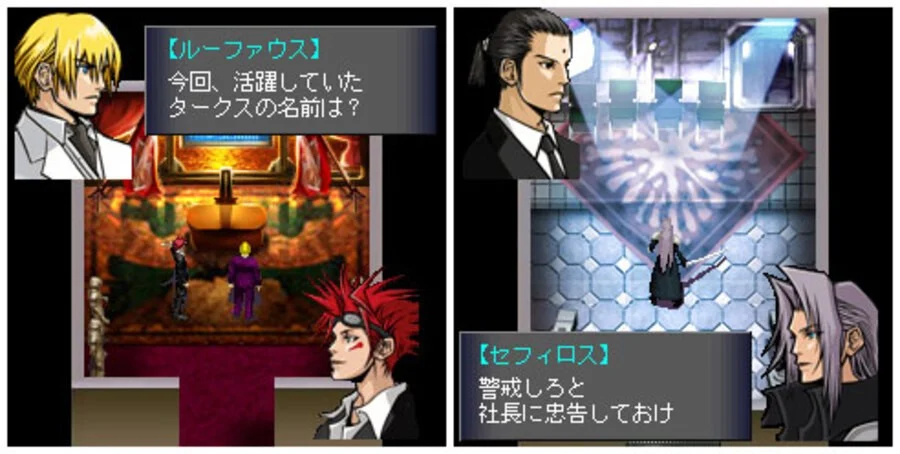
The images were released by Square Enix in 2004 to promote the game’s second chapter, and showed off the characters of Sephiroth and Rufus Shinra.
Hora Masahiro said:
“For mobile online RPGs, players must be able to enjoy the game in a short period of time, such as waiting for a bus, without the need to immediately respond to in-game events.”
“When you make a call, you have to contact the other party directly, but when you send a message, you don’t need to consider the other party’s situation. The other party can read and reply at their convenience. We plan to introduce a game system that takes this into consideration.”
“Players can team up not only with people they know, but also with strangers. Communicating with strangers can be a big obstacle for new players, so we attach great importance to making it easy for such users to participate.”
In Before Crisis, various multiplayer features are finally added. For example, Rescue Mode allows players to save friends who have fallen in battle, and players can also request or share Materia over the Internet.
Magic crystal sharing system
Game producer Kotei Ito further explained how the Materia Sharing System works in an interview with itmedia:
“The Materia Support system was inspired by how we could implement the ‘network’ part of an ‘Online RPG’ given these constraints. The way it works is that when you run out of MP and are trapped by enemies, you can send a message to headquarters (HQ) to request Materia support.
A notification is then sent to the other user, who can choose to send the materia to you, and you can use the materia. We used the DX messaging feature of the 900i series phones to achieve this. “
Magic crystal generation system
Interestingly, this isn’t the only design in Before Crisis that cleverly takes advantage of the capabilities of the mobile platform. The game also introduces a “Materia Generation System”, which allows players to generate materia with different properties through the color of pictures taken by the phone’s built-in camera. This creative function allows the game to fully utilize the hardware features of the FOMA 900i series mobile phones, and also allows players to find materials in the real world, making the game more interesting and interactive.
Kotei Ito said in an interview with ITMedia:
“Since mobile phones are equipped with cameras, we started to think about whether we could use this feature in interesting ways. This idea eventually led us to create the current materia generation system. We designed a unique ‘image analysis’ system. The ‘color’ of the object in the photo will determine the type of materia generated. Fire comes from red, thunder comes from yellow, earthquake comes from neutral colors, and so on.”
The technology did encounter some problems in its early days, though, with one commentator who was one of the first to play with the game pointing out that no matter how hard they tried, every picture they took ended up generating only Earthquake-based Materia. Perhaps anticipating this problem, Ito Yasunari gave some suggestions to the media in advance, reminding players that they can obtain better results by adjusting the color in the camera settings or taking pictures of non-reflective matte materials.
During the time Before Crisis has been online, new modes and features have been added to the game, including the ability to travel to the Golden Saucer and play various mini-games, as well as Weapon Mode, which allows players from across Japan to team up to defeat Jade Weapon. However, because most reports about game events were published in Japanese, and because very few players recorded game footage at the time, players outside Japan knew almost nothing about these contents.
In the years after Before Crisis’ initial release, the Western Final Fantasy fan community began an effort to collect information about the game, including old interviews with the developers, information from Japanese fan sites, and even any gameplay footage they could find.
This operation eventually led to a major discovery: on NicoNico animation, a Japanese user named Rinrin uploaded a live video of the game “Before Crisis”.
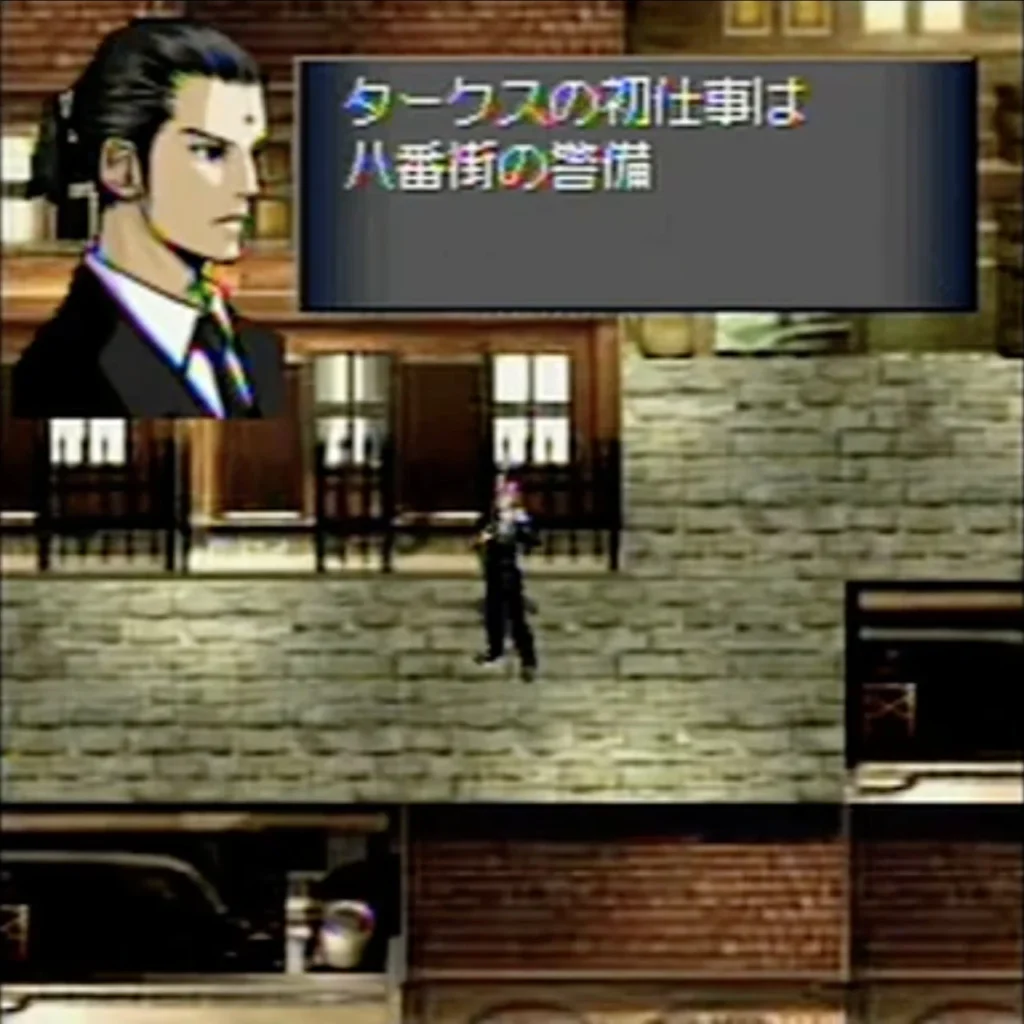
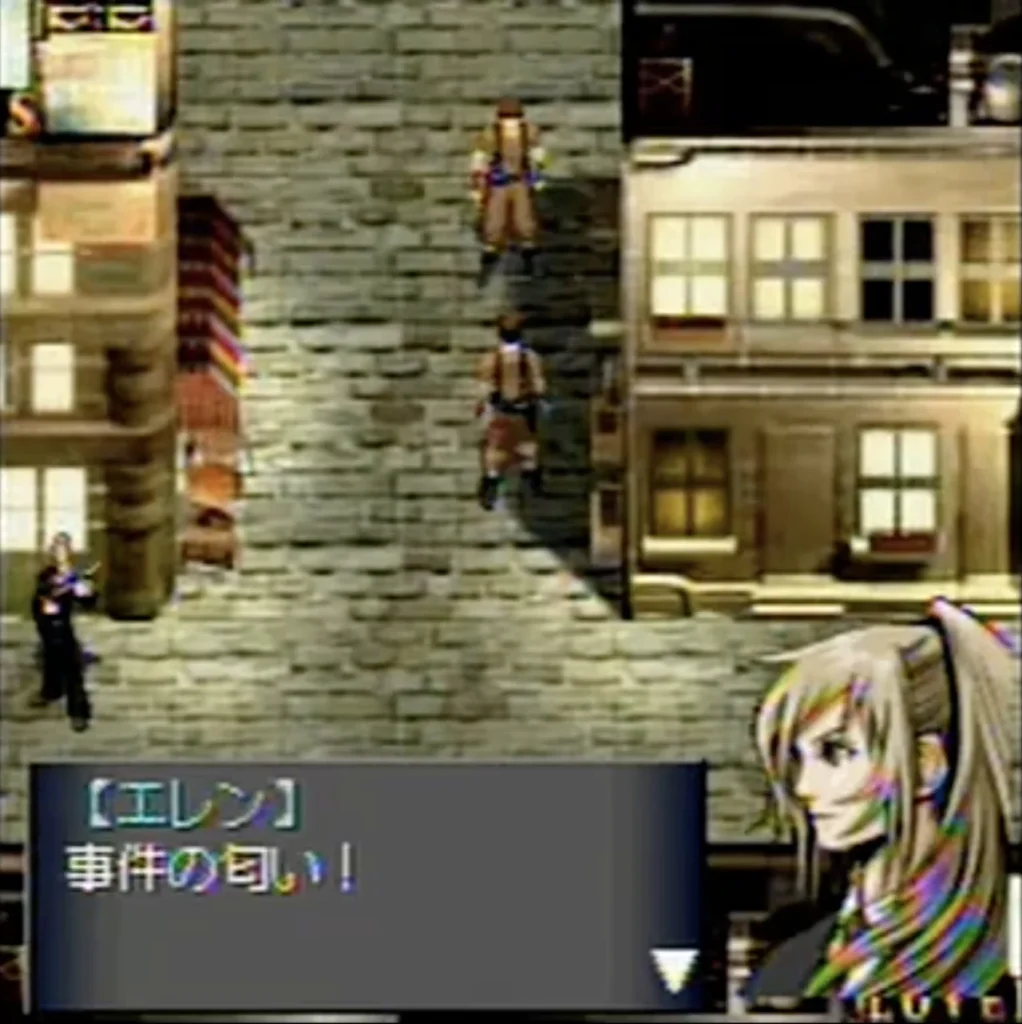
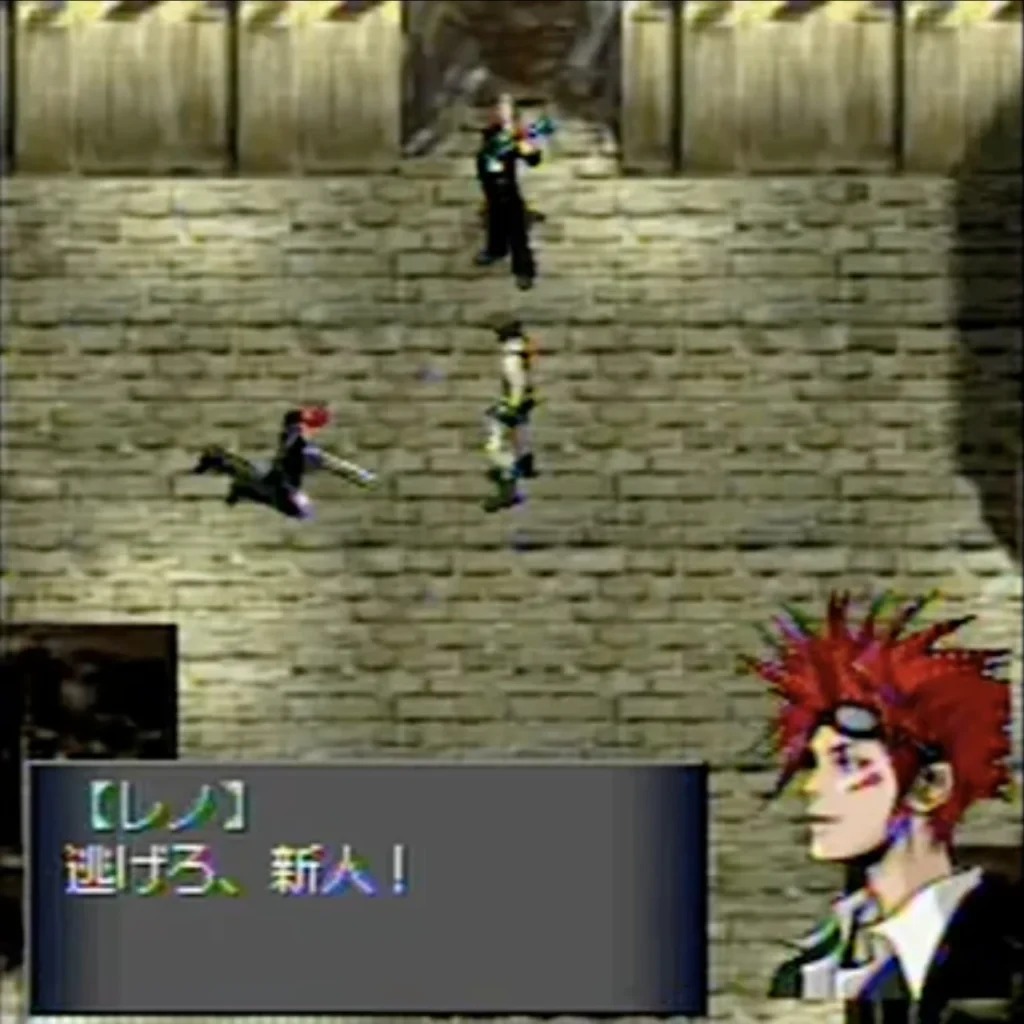
The video was later translated into English by Before Crisis researcher Grimoire Valentine and became RichterWalker used RPGMaker to remake the basics of the game.
These videos have given us a glimpse into Before Crisis’ storyline and the basic structure of the game, but some in the community want to go one step further: They want to find and preserve the original version of the game to ensure that future generations can experience it. Among these people is Final Fantasy series fan and feature phone saver Naoya, who started looking for the game in 2021.
Naoya said:
“I’ve known about the game’s existence since Final Fantasy VII Advent Children came out in the United States on a double-disc DVD. On the second disc, they showed trailers for games in the Final Fantasy VII series, including Before Crisis. I had no idea what I was looking at.
It wasn’t until I finished Final Fantasy VII Remake that I started thinking, “Well, I want to see more Final Fantasy VII-related content.” ’ So I looked up “Before Crisis” again and found a Livestream post by Shademp that talked about the process of finding “Before Crisis.”
I thought to myself, “Oh, no one has found it yet, we’re still looking.” 』』
According to Naoya, he volunteered to help track down more information and soon succeeded in obtaining a demo version of the EZ-Web version. This demo version was pre-installed on the KDDI W51H mobile phone, but only included the first chapter of the game. During this period, he also continued to look for clues about the full version of the game, and finally accidentally discovered a post from a Japanese Twitter user, which showed some new and unexposed pictures of “Before Crisis” taken from Docomo P04B.
Naoya immediately excitedly contacted the user via private message (DM) and asked if the other person would help him dump (dump) the game content, provided he could find a way to extract the file. Surprisingly, the other party agreed.
“As you know, there is only one complete live video of Before Crisis online,” says RockmanCosmo, another prominent member of the feature phone preservation community. “Of course, there is also a remake using RPGMaker, but that’s just a recreation.
If we want to talk about the direct recording of the complete game content, there is only one segment on the Internet, and it is not a complete record.
So when this Twitter user posted screenshots of different Turks performing different skills, Naoya realized it was something he had never seen before.
So he contacted the other person and asked, “Hey, do you still have this phone with the game installed?” I want to help you save it. 』』
According to Naoya and Cosmo, the number one obstacle that prevents them from saving Before Crisis is how to transfer the game files from their mobile phone.
XYZ (friends of Cosmo and Naoya) had previously successfully developed a non-destructive transfer method to transfer game files from certain Japanese feature phones using a transmission line (the method was previously described in the feature phone preservation topic).
However, this method does not initially support the phone models stored in “Before Crisis”.
Therefore, the team had to do a lot of background technical preparation before convincing the phone owner to send in the phone and perform file extraction. During this long and grueling wait, Naoya even engaged in negotiations that lasted three years. As Cosmo describes it, Naoya reconnected with the phone’s original owner multiple times to make sure the opportunity didn’t slip away.
Finally, in July 2024, RockmanCosmo and Naoya announced on Twitter that their team had achieved a major breakthrough: the successful transfer of Before Crisis, along with 18 additional i-Mode games from this single device that were previously thought to be lost.
However, the work is not over yet, the next step is to successfully run the game in the Doja SDK emulator. However, due to the complexity of the game architecture and the fact that the Square Enix servers have long been offline, the team has only made limited progress in this regard.
“Before Crisis is one of the biggest challenges we’ve faced since entering the Square Enix mobile gaming space,” Cosmo said.
“Because what Square Enix did at the time was: ‘We’ll put one chapter at a time on your phone. When you need the next chapter, we’ll transfer the data through the server.’
This was indeed a good way to solve the space constraints of mobile phones at the time.
But for a game as ambitious as Before Crisis, this becomes a huge problem, as the game exchanges data with Square Enix’s servers almost constantly.
And, let’s not forget, this is a flip phone game from 2004.
As a result, some of the most important features in Before Crisis are essentially server-side. “
In search of a solution, the team posted a request for assistance and eventually received a response from someone named Yuvi.
Yuvi is a game saver, hacker, translator, and fan of the Final Fantasy series.
He agreed to help the team reverse engineer the servers needed to get the game running again.
Yuvi said:
“As you mentioned, the game needs to constantly communicate with a server that no longer exists. The only way to rebuild the server currently is to first understand what the game is doing and what type of data it needs. Once we understand these parameters, we can continue to try and tinker with the data to find matching data.
“Before Crisis” will make at least six packet requests before entering the main menu, and more if it is a new user. These requests include confirming that you have enough points to play, checking for updates, reading player names, save data, Chocobo data, Golden Saucer data, chapter information, Turk data, and finally downloading a file called “Fix”. This “Fix” file is the main file of the game and is used to populate and load the game’s main menu. “
Currently, the team is making amazing progress in rebuilding the game.
In just two days and about 24 hours of actual work, they managed to get to the game’s main menu.
They then managed to recreate several elements from the game, including the shop, materia generation, materia gear, and Reno’s training mode.
However, to progress the reconstruction further, Naoya, Cosmo, and Yuvi all agree that more phones with different chapters installed are needed to extract all assets and materials.
The work is expected to take several years and require a combination of luck and a lot of hard work to complete.
However, the team is up for the challenge and is willing to bring the game back to life, even if it requires a huge amount of effort.
source:Time Extension